
Shlok PatelReal Estate & Investment Research
HomeResearchCase studiesCalculatorsAbout
Shlok Patel

My research on Los Angeles real estate, hotel ownership, triple-net leases, and public companies.

ExploreResearchCase studiesCalculatorsAbout
I’m a college student, and the research and calculators on this site aren’t investment advice. Please check the original records and speak with a qualified professional before making a financial decision.
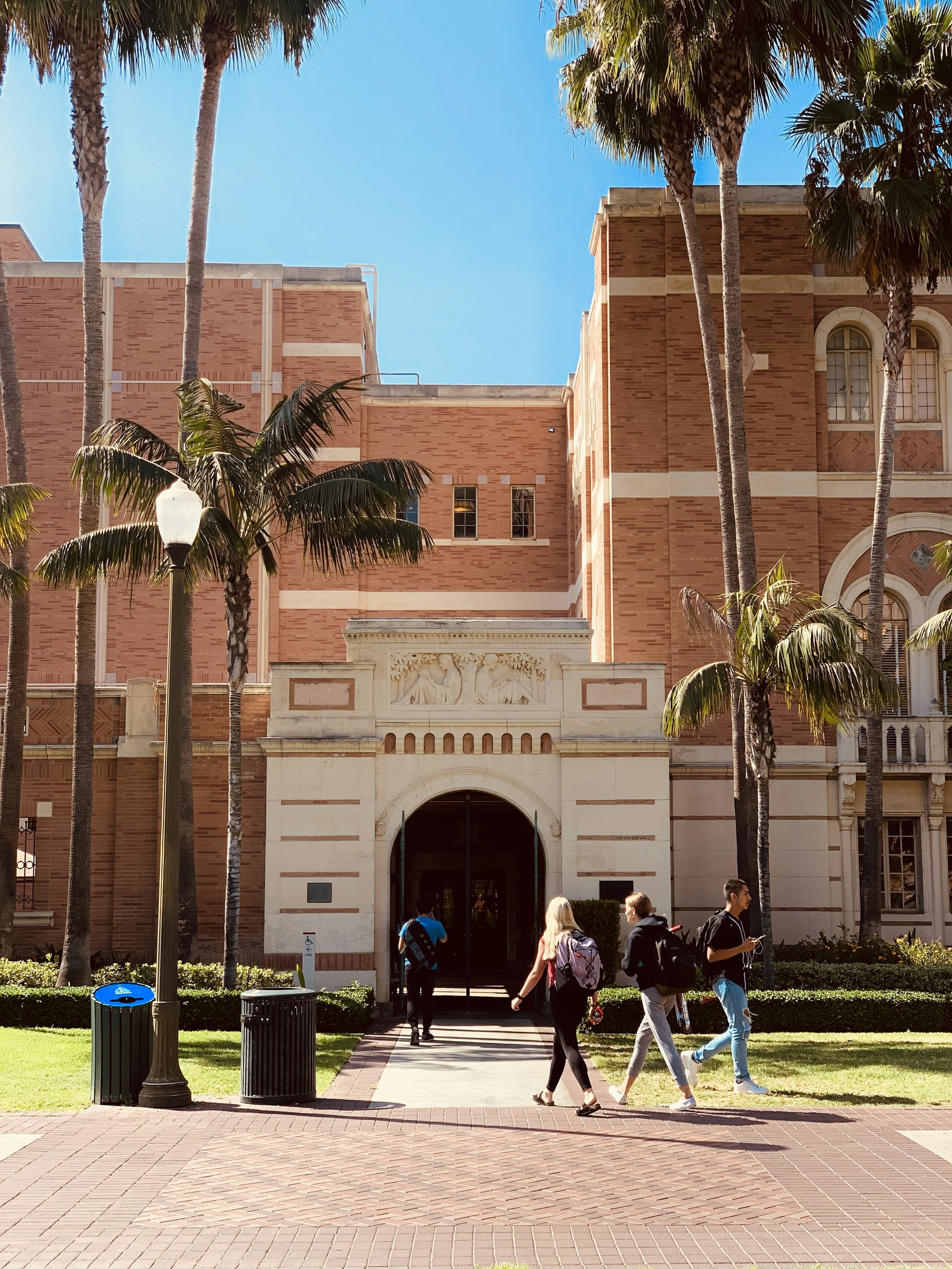
Brick campus buildings and palm trees at the University of Southern California

Research library / 25 articles

Research Library

This is the full collection of my work on Los Angeles real estate, hotels, triple-net leases, public companies, semiconductors, retail, and interest rates.

Filter the library25 articles shown
25 ARTICLESALL RESEARCH
01
Los AngelesUniversity Park

How USC Village changed the real estate around University Park

USC Village put housing for about 2,500 students beside a grocery store, restaurants, and public space on fifteen acres next to campus. I researched how that concentration of residents and spending affected the apartments and businesses around University Park.

7 min readRead the article ↗
02
HospitalityIndustry history

How Indian American families built such a large share of the U.S. hotel market

AAHOA reports that its members own about 60 percent of hotels in the United States. The number is often repeated as a quick fact about Indian American ownership, while the history of how families built that position over several generations receives far less attention.

6 min readRead the article ↗
03
Los AngelesWorld Cup business

How World Cup visitors spent money across Los Angeles

SoFi Stadium hosted eight matches, but a World Cup trip involved much more than the hours spent inside the stadium. Fans landed at LAX, stayed across the county, used regional shuttles, and attended events from the Coliseum to Downtown, so I traced where that spending was most likely to go.

7 min readRead the article ↗
04
Los AngelesDowntown development

How Oceanwide Plaza became Downtown LA’s graffiti towers

Oceanwide Plaza was supposed to bring a hotel, condominiums, shops, and restaurants to a full block across from Crypto.com Arena. Instead, construction stopped, bills went unpaid, and the empty towers became covered in graffiti before a proposed $470 million sale brought the project back into the news.

7 min readRead the article ↗
05
Equity ResearchRetail strategy

Why Trader Joe’s parking lots always feel too small

Trader Joe’s parking lots have become a running joke, but the congestion follows from a real estate problem. The stores are small enough to receive fewer required spaces and popular enough to bring in the traffic of a much larger supermarket.

6 min readRead the article ↗
06
Equity ResearchBusiness operations

How In-N-Out’s supply chain decides where it can open next

In-N-Out can’t enter a new state by signing a franchise agreement and shipping a box of instructions. Before the first restaurant opens, the company needs food production, warehouse space, delivery routes, trained managers, and sites that can handle unusually long drive-through lines.

6 min readRead the article ↗
07
Los AngelesWestside transactions

Why Brentwood apartment buildings are selling at high prices per unit

Three Brentwood apartment sales totaled nearly $96 million even though borrowing remained expensive. The prices caught my attention because they show what buyers were willing to pay for a small number of apartments in a neighborhood where developable land and available buildings are both limited.

6 min readRead the article ↗
08
Los AngelesOrange County retail

A Laguna Niguel shopping center sold after 57 years with the same family

One family owned Crown Valley Center from its construction in 1969 until the recent $20.5 million sale. I looked at what made a 57-year hold possible and why an institutional buyer wanted a grocery-anchored center that may still have below-market leases.

6 min readRead the article ↗
09
HospitalityOperating strategy

Family-run motels: labor costs, faster decisions, and owner risk

At a small motel, the same owner may check in a guest, call the air-conditioning contractor, and review payroll before dinner. Direct involvement can lower costs and speed up decisions, but any comparison becomes misleading when a relative’s work is treated as free.

6 min readRead the article ↗
10
Equity ResearchBusiness model

Why Costco keeps the hot-dog combo at $1.50

Costco’s hot dog and soda still cost $1.50 even though food, wages, and nearly everything else in the warehouse have become more expensive. I looked at why the company protects this one price so aggressively and whether the combo has to earn money on its own.

6 min readRead the article ↗
11
Los AngelesSubmarket comparison

Why Pasadena apartments have held up better than offices

Pasadena apartment buildings and offices sit in the same city, yet their vacancy rates tell very different stories. Households still need a place to live near jobs, schools, family, and transit, while an office tenant can shrink, work remotely, or postpone a move.

6 min readRead the article ↗
12
Equity ResearchCompany comparison

Marriott vs. Hilton: how asset-light hotel companies make money

Marriott and Hilton signs appear on thousands of buildings that the companies don’t own. Hotel investors pay for the real estate, renovations, employees, and property debt, while the brand companies collect franchise and management fees from a growing network.

7 min readRead the article ↗
13
Market CommentaryRates and valuation

A higher mortgage rate can erase a multifamily deal before the rent changes

An apartment building can raise its rents and still be worth less than it was under cheaper financing. A higher mortgage payment limits what a buyer can borrow, while a higher required return reduces the price supported by the same income.

6 min readRead the article ↗
14
Equity ResearchREIT comparison

Comparing Host Hotels, Apple Hospitality, and Summit Hotel Properties

A hotel REIT owns the actual buildings, pays for renovations, carries property debt, and receives the cash left after guests are served and expenses are paid. The dividend is easy to notice, although a high yield may be warning investors about a renovation bill, weak balance sheet, or softer travel demand.

6 min readRead the article ↗
15
Equity ResearchSemiconductor map

Nvidia, AMD, Micron, TSMC, Broadcom, and Marvell in the AI supply chain

The AI boom is usually discussed through Nvidia’s GPUs, but a working data center needs memory, advanced manufacturing, networking chips, optical links, cooling systems, and enormous amounts of electricity. I mapped the companies behind those less visible parts of the system.

7 min readRead the article ↗
16
Equity ResearchCompany research

Micron’s HBM business and the AI memory cycle

An advanced GPU can’t do much if it spends its time waiting for data. High-bandwidth memory, usually called HBM, sits beside the processor and moves information quickly enough to keep it working, while using much more factory capacity than ordinary DRAM.

6 min readRead the article ↗
17
Equity ResearchValuation note

How much growth is already priced into Nvidia?

Nvidia’s advantage now reaches beyond the GPU into CUDA software, networking, and complete systems. The harder part of studying the stock is deciding how much of that strength investors already expect the company to deliver.

6 min readRead the article ↗
18
Market CommentaryProperty finance

What a cap rate explains, and what it leaves out

A cap rate compresses one year of property income and a purchase price into a single percentage. Comparisons become convenient, although the number still hides the lease, future repairs, mortgage, and everything that happens after the first year.

5 min readRead the article ↗
19
Real EstateLease analysis

How tenant credit and lease terms affect a triple-net property

A triple-net lease can make ownership look simple because the tenant may pay taxes, insurance, and much of the maintenance. The owner is still depending on one contract, one rent check, and a building that might be expensive to reuse when the tenant leaves.

6 min readRead the article ↗
20
Real EstateRollover analysis

What happens to a net-lease property's value when only five years remain?

A tenant can pay every rent bill on time while the property quietly becomes harder to finance and sell. As the lease approaches expiration, buyers know less about the next tenant, the next rent, and the amount of construction that may be required.

5 min readRead the article ↗
21
Los AngelesDowntown Los Angeles

When does a discounted Downtown Los Angeles office become investable?

Some Downtown Los Angeles offices are selling for a fraction of their former values and far less than it would cost to build them today. The discount is tempting, although it may be paying a buyer to accept empty floors, expensive renovations, limited financing, and a difficult block.

7 min readRead the article ↗
22
Equity ResearchStorage company comparison

Sandisk vs. Western Digital after the company split

After the split, Sandisk sells NAND flash and solid-state drives while Western Digital concentrates on hard disks. Both store the growing amount of data produced by AI systems, but they do it with different technology, economics, and exposure to pricing cycles.

7 min readRead the article ↗
23
Equity ResearchCompany research

Marvell’s AI revenue comes from custom chips, optics, and networking

Marvell doesn’t make the main AI accelerator, yet its custom chips, optical connections, switches, and storage products help thousands of processors operate as one system. Data centers now account for roughly three quarters of the company’s annual revenue.

6 min readRead the article ↗
24
Equity ResearchTurnaround research

Intel foundry: losses, outside customers, and manufacturing progress

Intel is trying to repair two businesses at the same time: its own processors and a foundry that manufactures chips for outside designers. The factories could make Intel strategically important again, but they are consuming cash and still report multibillion-dollar operating losses.

7 min readRead the article ↗
25
Market CommentaryAI spending

How Microsoft, Alphabet, and Meta are paying for the AI buildout

Microsoft, Alphabet, and Meta are committing extraordinary amounts of money to servers, networking, power, and data-center buildings. Their existing software, cloud, search, and advertising businesses can fund the construction, but the equipment will create depreciation and operating costs for years.

7 min readRead the article ↗