
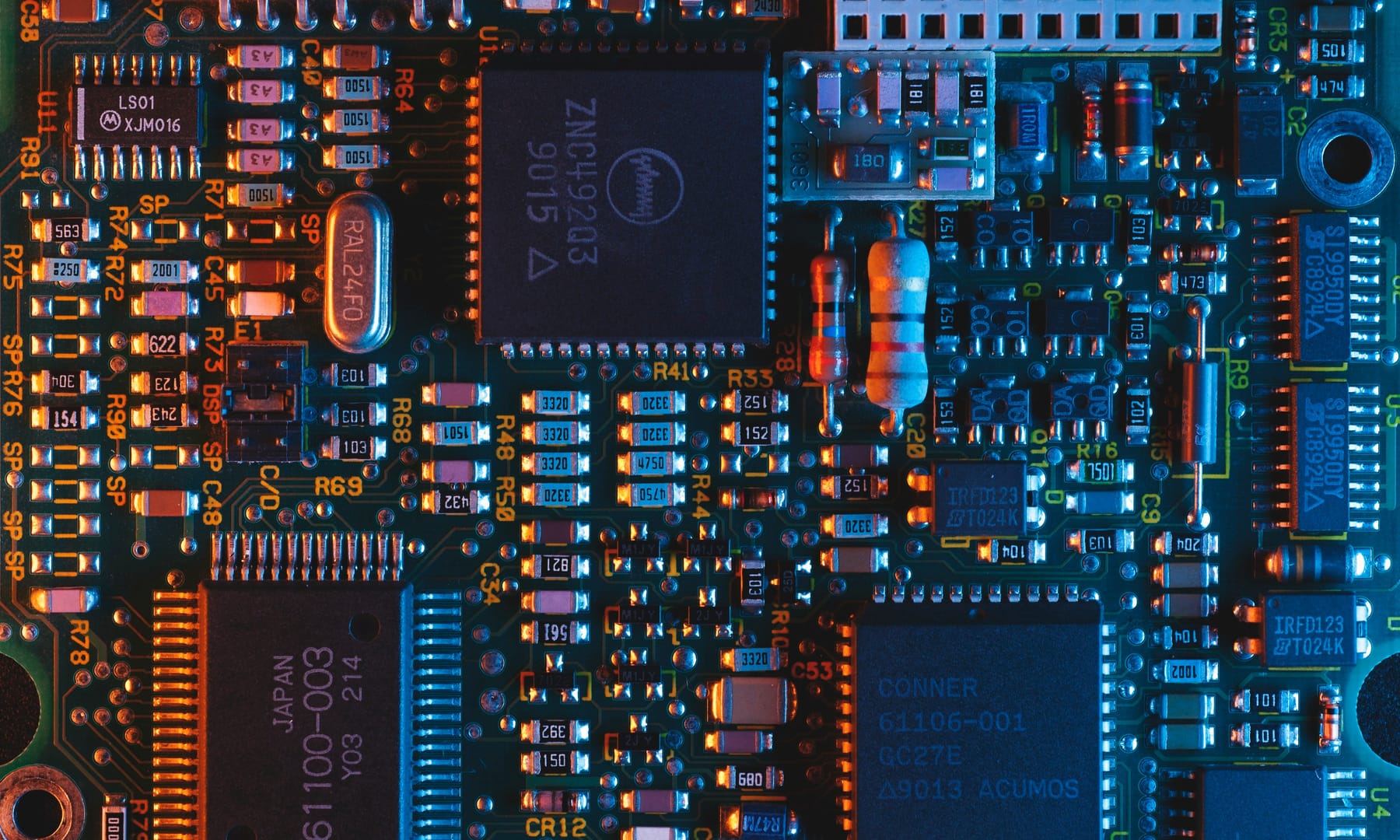
One AI rack uses GPUs, HBM, networking, optics, and power equipment
More artificial intelligence will require more accelerators, although the investment trail continues well beyond the GPU. Each accelerator must be packaged with high-bandwidth memory, connected with thousands of other chips, cooled, powered, and manufactured at a leading-edge fab. A shortage in any one of those areas can leave an expensive purchase order waiting to become a functioning cluster.
The company map begins with Nvidia and AMD in accelerators, followed by Micron, SK Hynix, and Samsung in memory. TSMC manufactures many of the advanced chips, Broadcom participates in networking and custom silicon, and equipment companies such as ASML and Applied Materials sit farther upstream. The businesses serve the same expansion, although their margins, capacity requirements, and exposure to a downturn differ substantially.
Nvidia leads GPUs, software, networking, and complete systems
Nvidia reported full-year revenue of $215.9 billion, with quarterly data-center revenue reaching $62.3 billion. The company sells an integrated platform of CUDA software, networking, systems, and support around its processors, making a competing chip's lower price less persuasive when switching could delay a multibillion-dollar deployment.
Rapid growth has also raised the expectations built into Nvidia’s valuation. Revenue, margins, and free cash flow have to keep pace as the base becomes larger. Customer concentration, gross margin, product transitions, and the share of spending from a few cloud companies belong near the top of the review.
AMD offers cloud companies a second accelerator platform
AMD's data-center business produced $16.6 billion of revenue in its most recently reported full year, up 32 percent. A valuable accelerator franchise can grow from competitive products, improving software, and several large customers seeking a second supplier without replacing CUDA across the entire market. The company's long-term purchase agreement with OpenAI offers evidence of that demand.
One large contract shouldn’t become a guaranteed forecast. Agreements can include milestones, changing delivery schedules, and aggressive future volumes. AMD has to scale supply and software support while protecting margins, and the stock may move on the headline long before related revenue appears in the income statement.
$215.9BNvidia full-year revenue
$16.6BAMD data center revenue
4 layerschip stack followed
Supply limits can shift from GPUs to memory, packaging, or power
During one part of the cycle, accelerators may be scarce. Later, high-bandwidth memory, advanced packaging, transformers, or data-center power can become the limiting factor. Pricing power can move with the bottleneck even while total AI spending rises. Micron is interesting here because HBM uses much more wafer capacity than conventional memory and requires demanding packaging and qualification.
A broad boom can eventually produce overbuilding as suppliers add capacity from forecasts that may be revised and customers place overlapping orders to protect themselves from shortages. Semiconductor history repeatedly shows strong demand and limited supply giving way to excess inventory and lower prices. AI may change the product under pressure and extend the period of tight capacity, while the industry's basic exposure to cycles remains.
Group the watchlist by product and customer
Nvidia’s case depends on data-center growth and the durability of gross margin. AMD needs accelerator adoption and stronger software support. Micron should be valued across a range of memory prices, including prices below the peak quarter. TSMC requires attention to advanced-node demand, capital intensity, and geopolitical risk.
Several semiconductor stocks can depend on the same cloud capital-spending cycle, so a longer list of tickers may still leave a portfolio exposed to one slowdown. I would favor companies with demand supported by actual deployments, supply that takes time and technical skill to add, and a share price that works under an ordinary forecast.
The AI supply chain is connected, but the stocks shouldn’t be treated as interchangeable. Nvidia sells the leading accelerator platform, AMD offers an alternative, Micron supplies HBM, TSMC manufactures advanced chips, and Broadcom and Marvell participate through custom silicon and networking. I would value each company with its own revenue, margin, supply, and customer risks. Buying several tickers tied to the same cloud spending plan may look diversified while leaving the portfolio exposed to one shared slowdown.
I used the filings, reports, public records, and articles linked below. Figures in the three case studies are practice numbers and are identified near the top of each article.
01Nvidia fourth-quarter and full-year results↗02AMD annual report and SEC filings↗03Micron quarterly results↗