
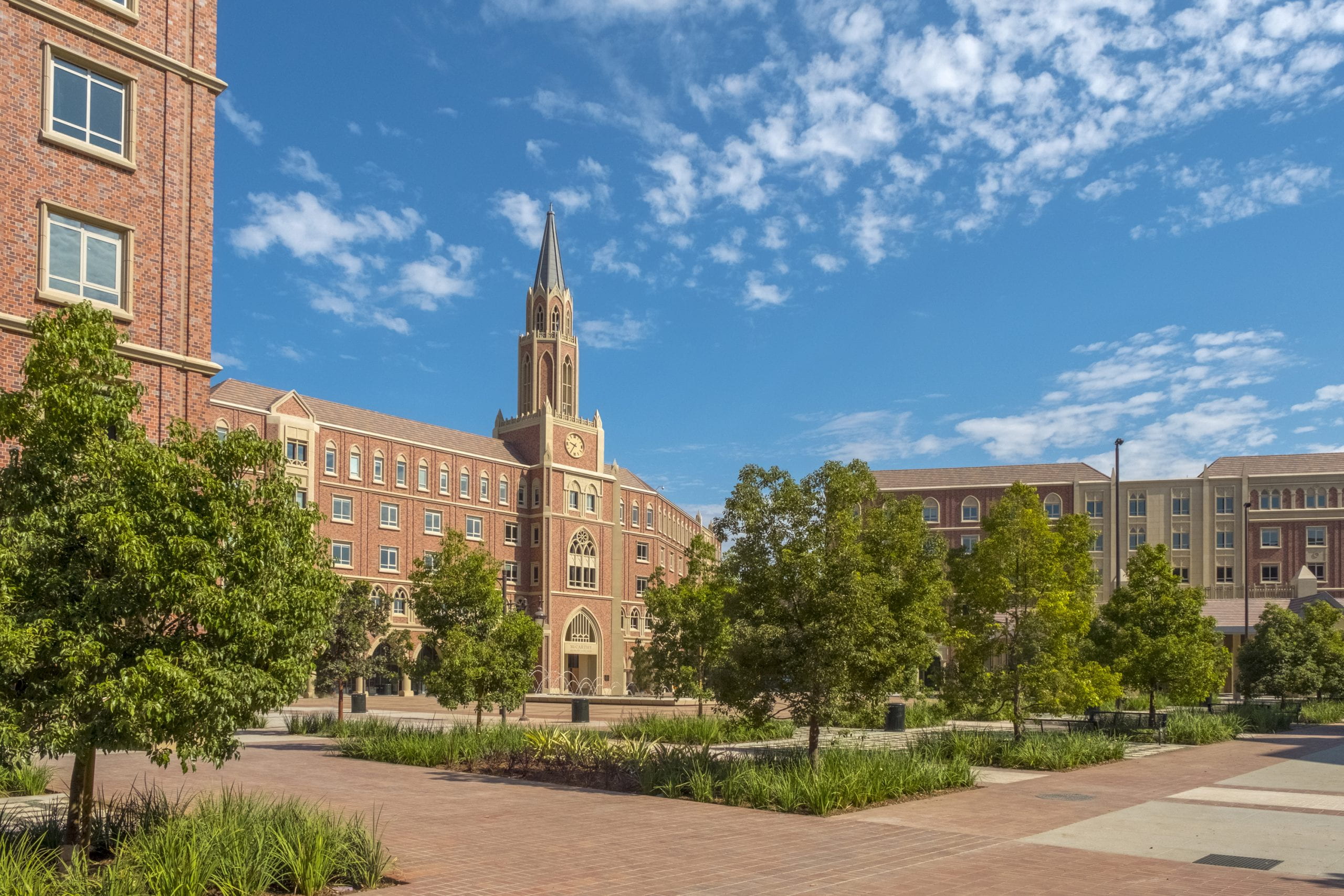
USC Village added housing, groceries, restaurants, and public space
Before USC Village opened, the university’s students used apartments and shops scattered across a much wider area around University Park. USC combined housing, a grocery store, restaurants, study space, fitness facilities, and other services into a single 15-acre project immediately north of the main campus. The finished development contains six buildings and about 1.25 million square feet, making it the largest mixed-use development completed in South Los Angeles at the time.
A project with several uses can produce more dependable foot traffic than a stand-alone apartment building or shopping center. Residents buy groceries and meals close to home, campus visitors use the same public spaces, and retailers receive customers during the morning, afternoon, and evening. USC also funded the $700 million development itself, which allowed the plan to move forward without relying on public land or a public construction subsidy.
About 2,500 student beds changed nearby apartment demand
University planners expected the broader development plan to add thousands of student beds and reduce pressure on nearby rental housing. USC estimated that the Village alone could free roughly 900 units that students had previously occupied in the surrounding area. The exact effect is difficult to isolate because enrollment, household size, new construction, and rent levels also change, although moving more students into purpose-built housing should reduce some competition for older neighborhood apartments.
Demand around the campus remains substantial because students who prefer private apartments, faculty, staff, medical workers, and households with long-standing ties to South Los Angeles are all looking for housing near tens of thousands of students and employees. Proximity to USC still doesn’t guarantee high rent, since building condition, security, parking, unit size, transit access, and local rent regulation determine how an individual property performs.
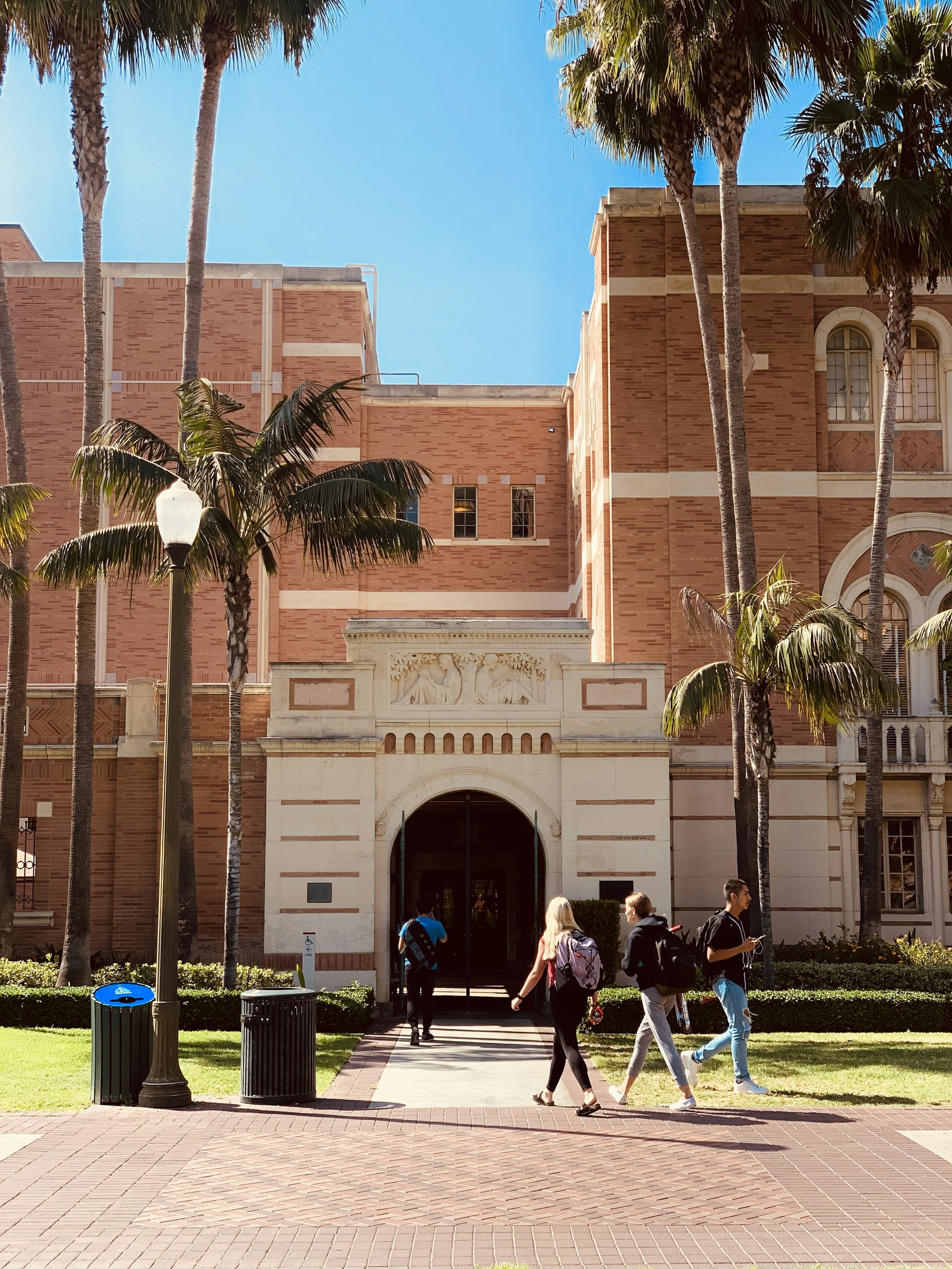
Students and employees give the stores repeat customers
Neighborhood retail performs best when customers return frequently for ordinary needs. Groceries, coffee, meals, pharmacy items, and personal services have a steadier relationship with campus life than stores that depend on occasional large purchases. USC Village created a concentrated customer base within walking distance and gave outside visitors another reason to remain in University Park before or after an event.
The university calendar creates sharp swings in foot traffic as summer sessions, winter break, football weekends, commencement, and major Coliseum events bring very different crowds. A retailer near campus needs enough neighborhood customers to cover the quieter weeks outside major events and the main academic calendar.
$700MUSC-funded investment
1.25M SFmixed-use development
15 acressite beside campus
USC’s campus keeps jobs and spending in University Park
USC’s economic-impact study estimated billions of dollars in annual Southern California activity from university operations, wages, purchasing, students, visitors, research, and health care. Economic-impact figures include indirect spending and shouldn’t be confused with revenue earned by nearby property owners. They still show why the university has a wider influence than a conventional office tenant that can relocate when its lease expires.
Campuses are unusually durable pieces of real estate. Laboratories, residence halls, libraries, athletic facilities, and historic buildings tie the institution to one location for generations. Long-term commitment can encourage apartment renovations, new restaurants, student-housing development, and transit investment because nearby owners can plan around a customer and employment base that is unlikely to disappear suddenly.
The agreement funded housing, local hiring, and neighborhood projects
USC’s agreement with the city covered several concerns raised during the approval process, including as much as $20 million for a city-managed affordable-housing fund, local hiring and job-training programs, help for nearby small businesses, new parks and community gardens, and additional student beds on university property. USC valued the full package at $40 million.
Results in the surrounding neighborhood offer a better way to judge those commitments. The amount of housing completed, local jobs filled, small businesses that remained open, pedestrian traffic, and transit use all help show what residents actually received from the agreement.
USC Village changed University Park most directly by moving about 2,500 students closer to campus and giving them places to buy groceries, eat, study, and exercise within the neighborhood. Many other factors affect the performance of nearby apartments and stores, although the project clearly places more regular customers within walking distance and reduces the number of daily trips students have to make outside the area. USC’s long-term ownership also gives the university a reason to keep maintaining the property after construction is complete.
I used the filings, reports, public records, and articles linked below. Figures in the three case studies are practice numbers and are identified near the top of each article.
01USC Village development facts↗02USC Village approval and projected neighborhood impact↗03USC development agreement and community benefits↗04USC economic-impact study overview↗